
Is Jewellery a Good Investment? What You Should Know
This is one of the most asked questions in Indian jewellery. And most answers you will find are either from jewellers trying to sell you something or from financial advisors who think all jewellery is the same.
Neither answer is fully honest.
The real answer is more nuanced and more useful. Jewellery can be a good investment in specific circumstances, with specific types of pieces, and only if you go in with realistic expectations about what you are buying and how it holds value.
This blog gives you that honest answer. It covers what happens to the value of jewellery when you buy it, when you hold it, and when you sell it. It covers which types of jewellery hold value better than others. It covers what the difference between jewellery as a financial investment and jewellery as a store of value and cultural wealth actually is. And it tells you what to buy, and what not to buy, if long-term value matters to you.
Please note: this blog is educational and informational. Claude is not a financial advisor and this is not financial advice. For specific investment decisions, consult a qualified financial professional.
The Honest Starting Point: What You Are Actually Buying
When you buy a piece of jewellery, you are not buying a single thing. You are buying several things bundled together.
You are buying the raw material, which is the metal and the stones. This component has a market value that can be tracked and that moves with commodity prices.
You are buying the making charges, which is the cost of crafting the raw material into a finished piece. This component is non-recoverable in most resale scenarios.
You are buying a retail margin, which is the jeweller's or designer's markup over the raw material cost plus making charges. This component is also largely non-recoverable in resale.
And for designer or heritage pieces, you may also be buying design value, which is the premium that comes from a named designer, a specific aesthetic, or a cultural heritage that makes the piece desirable beyond its material content.
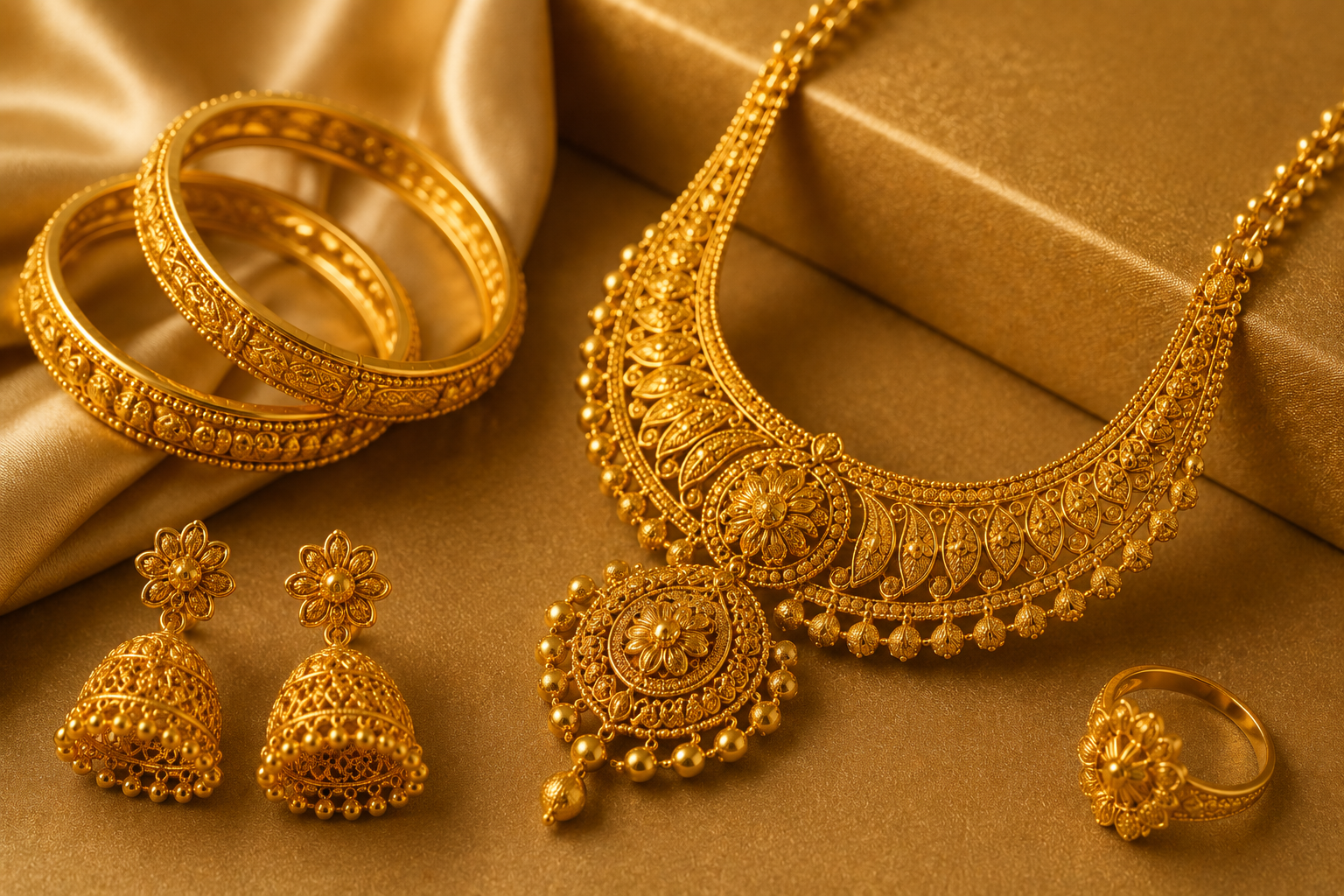
When you buy gold jewellery, you are not buying only gold. You are buying gold plus craftsmanship, retail margins, and brand positioning. This difference is the main reason gold jewellery investment returns are often lower than other gold investment options in India. Mahila
Understanding this bundled structure is the starting point for any honest conversation about jewellery as an investment.
The Gold Jewellery Investment Reality in India
India has a deep cultural relationship with gold jewellery as a store of wealth. The question is whether that cultural reality translates into sound financial investment.
Take a 20-gram 22-karat gold necklace. At Rs 10,000 per gram, the base cost is Rs 2,00,000. Add 20 percent making charges and 3 percent GST, and your total bill climbs to Rs 2,47,200. Now try selling it the next day. You will face non-refundable making charges, a purity deduction since 22K gold is only 91.6 percent pure, additional resale cuts, and no GST refund. The resale value is around Rs 1,80,000 to Rs 2,00,000. That is a Rs 47,000 to Rs 67,000 loss, roughly 20 to 27 percent gone instantly.
This is the structural reality of gold jewellery as a short-term financial investment. The making charges and taxes you pay on purchase are not recoverable when you sell. You need gold prices to rise significantly just to break even on the total purchase cost.
Over a long enough time horizon, however, gold itself has been a strong store of value in India. Gold has more than tripled in rupee terms since 2017, underscoring why many Indian investors consider gold as a long-term store of value.
Gold experienced a meteoric rise in 2025, breaking historical records with an impressive annual increase of nearly 65 percent.
The key distinction here, which most discussions of jewellery investment miss, is the difference between gold as an asset and gold jewellery as an asset. They are not the same thing.
Jewellery purchases come with making charges that typically range from 8 to 25 percent, and in some cases even 30 percent or more. There are also wastage charges sometimes between 10 and 48 percent of the gold's value. Neither of these costs is recovered when the piece is resold. For investors focused purely on financial returns, simpler forms of gold tend to work better: coins, bullion bars, exchange-traded funds or sovereign gold bonds.
The Types of Jewellery That Hold Value Better
Not all jewellery holds value equally. Within jewellery, there is a significant range in how different types retain their value over time.
Plain Gold Jewellery
Plain gold chains, bangles, and simple rings without stones or heavy making charges hold value best among gold jewellery because their resale is primarily based on the gold weight and purity. A buyer or a jeweller willing to buy back a plain gold chain is essentially paying for the gold. The making charge loss is real but the transaction is simpler and the recovery rate is higher.
Simpler items like plain chains, bangles or rings without stones tend to retain value better. The closer the product is to pure bullion, the better the resale potential.
Buyer A buys a plain 22K chain with minimal markup. Resale offers stay closer to gold value. Buyer B buys a trendy 14K fashion piece. Much of the purchase price goes toward design and branding, which disappears at resale.
Designer and Heritage Jewellery
This is where the conversation becomes more interesting and more specific to what Minerali sells.
Designer jewellery from named labels with genuine craft heritage holds value differently from anonymous fashion jewellery. A well-made Kundan set from a respected designer label, a Polki necklace with verifiable heritage craftsmanship, or a 925 silver piece from an artisan with a documented creative legacy does not behave like a plain gold bangle in the resale market.
The design value, the craft heritage, and the label's reputation all contribute to what someone is willing to pay for the piece in a secondary market. These pieces are not resold to a bullion dealer. They are resold to buyers who specifically want that piece, that designer, and that level of craftsmanship.
This is a smaller, more specialised market. But it exists. And for pieces from designers with strong reputations and genuine craft identity, the secondary market can support prices significantly above the raw material value.
The value of any jewellery item is usually determined by the individual piece, not the sum of its parts. Jewellery prices are typically affected by craftsmanship and exclusivity.
925 Sterling Silver Jewellery
925 sterling silver jewellery occupies an interesting position in the value conversation.
Silver recorded its best performance since 1979 in 2025, with a spectacular increase of around 150 percent. Silver now combines two complementary profiles: that of a precious metal valued for portfolio diversification, and that of a raw material essential to cutting-edge industries. High-quality solid silver jewellery is a real investment and a true family heirloom. Unlike raw metal, it incorporates exceptional craftsmanship and emotional value. Its durability allows it to be passed down from generation to generation. India.com
For 925 silver jewellery from skilled artisan designers like Sangeeta Boochra, the combination of rising silver prices and genuine craft value creates a better value proposition than most fashion jewellery categories.
Explore designer jewellery collections with genuine craft heritage at Minerali: Browse the handcrafted 925 silver jewellery by Sangeeta Boochra and the designer Kundan collection at Minerali for pieces with the craft heritage and design identity that support long-term value retention.
The India-Specific Context: Jewellery as Cultural Wealth
Any discussion of jewellery investment in India needs to account for the fact that Indian attitudes toward jewellery are genuinely different from most other markets.
In India, jewellery is not purely a financial asset or purely a lifestyle purchase. It sits at the intersection of both.
India's investment demand for gold surpassed jewellery consumption for the first time on record in the March quarter of 2026, as investors turned to the precious metal amid subdued equity market returns.
This is a genuinely significant development. For the first time, more Indians are buying gold as a direct investment instrument rather than as jewellery. This shift reflects a growing financial sophistication among Indian gold buyers who understand the cost difference between buying jewellery and buying gold in its pure investment form.
Yet the cultural and emotional value of jewellery in India remains distinct and real. Wedding jewellery is not bought as a financial investment. It is bought as a cultural ritual, an emotional statement, and a tangible connection to family heritage. The woman who passes her Kundan set to her daughter is not thinking about the resale market. She is thinking about what the piece means.
This cultural dimension has genuine financial implications. Pieces that carry cultural meaning, bridal sets, heirloom designs, heritage craft pieces, retain desirability in a way that purely fashion pieces do not. The cultural demand is stable in a way that trend-driven demand is not.
Product Spotlight
The Navratan Polki Choker With Center Pendant at Minerali is an example of the category of jewellery where financial and cultural value converge most directly.
Polki jewellery uses genuine natural uncut diamonds. The diamond content has verifiable commodity value. The Navratan stone work adds genuine gemstone content across nine stone types. The Jadau setting is a heritage craft that commands premium pricing in the secondary market for authentic pieces. And the cultural significance of Navratan in Indian tradition creates a category of buyer who specifically seeks this piece type.
This is not the same as a plain gold chain from a financial value perspective. The multiple layers of material and craft value create a more complex and more potentially durable value proposition.
Explore the Navratan Polki Choker With Center Pendant and understand how genuine gemstone content and heritage craft combine in a single piece.
Jewellery vs Pure Gold Investment: The Honest Comparison
If your primary goal is financial return on gold, jewellery is not the optimal vehicle. This is the most important thing this blog can tell you clearly.
For investors focused purely on financial returns, simpler forms of gold tend to work better: coins, bullion bars, exchange-traded funds or sovereign gold bonds.
Gold ETFs give you pure exposure to gold price movements without making charges or GST. Sovereign Gold Bonds give you gold price exposure plus an annual interest payment and tax advantages on long-term holding. Both are significantly more efficient than jewellery as pure financial instruments.
If your goal is a combination of financial value, cultural meaning, aesthetic pleasure, and long-term heritage, then jewellery, specifically the right type of jewellery, occupies a space that none of these pure investment instruments can.
The question is not whether jewellery is better or worse than gold ETFs as an investment. They are different things serving different purposes. The mistake is treating jewellery as if it were a gold ETF, or treating a gold ETF as if it were a piece of jewellery.
What to Buy If Value Retention Matters to You
If you want to buy jewellery and have it retain meaningful value over time, here is specific guidance.
Choose pieces with high gold purity and low making charges relative to the gold content. A plain 22 karat chain with 10 percent making charges retains value better than an elaborate 18 karat fashion necklace with 40 percent making charges.
Choose pieces from designers with documented craft reputation. A Kundan set by a named designer with verified artisan heritage has a secondary market. An anonymous fashion Kundan piece has essentially no secondary market beyond its gold content.
Choose pieces that have cultural durability rather than trend relevance. Bridal Kundan, heritage Polki, and classical 925 silver with Indian craft traditions have been in demand for generations and will continue to be. Fashion-forward trend pieces from any year look dated within five years.
Choose pieces that are verifiably authenticated. For high-value pieces, buy from platforms like Minerali that carry named designer pieces with verifiable craft provenance. Know what you are buying and keep receipts, certificates, and original packaging.
Choose pieces you genuinely want to wear. Jewellery that stays in a drawer does not hold cultural value, emotional value, or practical value regardless of what happens to its financial worth. The pieces that matter in your wardrobe and in your family's story are the ones worth investing in.
Find designer pieces worth investing in at Minerali: Browse the full collection of designer jewellery at Minerali across Kundan, Polki, and 925 silver and look at pieces from named labels whose craft reputation supports long-term value retention.
Product Spotlight
The Grand Crystal Drop Pearl Bridal Necklace is a piece that illustrates the cultural value dimension of jewellery investment clearly.
Pearl drop bridal necklaces have been worn at Indian weddings for centuries. The design language is rooted in tradition that does not go out of style. A piece like this, worn at a wedding and stored carefully, retains its relevance for the next generation who will wear it at theirs. This cultural continuity is what makes certain types of jewellery genuinely valuable beyond their material content.
Financial instruments do not carry this. A sovereign gold bond cannot be placed around a daughter's neck at her wedding. The piece can.
Explore the Grand Crystal Drop Pearl Bridal Necklace and consider what its cultural durability contributes to its long-term value beyond the material content.
The Heirloom Argument: The Most Honest Case for Jewellery Investment
The most compelling argument for jewellery as an investment is not a financial one. It is a cultural and familial one.
A well-chosen piece of jewellery, made with genuine craft, bought from a reputable source, and cared for correctly, can be worn by one person, passed to the next, worn again, and passed again. Across two or three generations, the piece has provided aesthetic pleasure, cultural meaning, and a tangible thread of family continuity that no financial instrument can replicate.
This is the form of jewellery investment that has the strongest track record in India and the most defensible case. Not as a short-term financial trade. Not as a substitute for gold ETFs. As a generational store of cultural and emotional wealth.
The pieces worth buying on this basis are the ones made well enough to last, chosen carefully enough to remain meaningful across decades, and culturally rooted enough to remain desirable to the next generation who inherits them.
Frequently Asked Questions
Is gold jewellery a good investment in India?
Gold jewellery has both advantages and significant limitations as a financial investment. The gold content itself is a genuine store of value that has appreciated substantially over time. However, making charges, GST, and resale deductions mean you immediately lose 20 to 27 percent of the purchase price if you try to sell shortly after buying. For pure financial returns on gold, instruments like gold ETFs, sovereign gold bonds, or gold coins and bars are more efficient. Jewellery is best understood as a combination of cultural, emotional, and financial value rather than a pure financial instrument.
What type of jewellery holds its value the best?
Plain gold jewellery with high purity and low making charges holds resale value best among standard jewellery. Designer jewellery from named labels with genuine craft heritage and cultural significance holds a different type of value that includes design premium and secondary market desirability beyond raw material content. Heritage jewellery with bridal or cultural continuity, including Kundan, Polki, and 925 silver from reputable artisan designers, holds value through cultural durability that fashion pieces cannot match.
Is designer jewellery from Minerali a good investment?
Designer jewellery from curated platforms like Minerali, featuring named designers with verifiable craft heritage, is a more defensible value proposition than anonymous fashion jewellery. The design reputation, craft provenance, and cultural significance of pieces from labels like Sangeeta Boochra, Bridalaya, and the Kundan and Polki collections create secondary market demand that supports prices above raw material content. This is a different value proposition from pure gold investment and should be evaluated on those terms.
What is the difference between buying gold jewellery and investing in gold?
Gold as an investment instrument, through ETFs, sovereign gold bonds, coins, or bars, gives you direct exposure to gold price movements with minimal additional costs. Gold jewellery gives you gold price exposure plus making charges, GST, and retail margins that are not recoverable in resale. Gold jewellery also gives you something gold instruments cannot: aesthetic pleasure, cultural meaning, and the ability to wear and share the asset. The right choice depends on whether your goal is pure financial return or a combination of financial and cultural value.
Should I buy jewellery as a gift or as an investment?
Jewellery given as a meaningful gift, particularly bridal jewellery, heritage pieces, or jewellery with cultural significance, occupies both categories simultaneously. The gift has immediate emotional value. If chosen well, it also has long-term cultural and material value that makes it one of the most meaningful gifts in Indian tradition. The key is choosing pieces made with genuine craft that will last and remain desirable, rather than trend-driven fashion pieces that date quickly.
How do I make sure the jewellery I buy retains value?
Buy from reputable sources with named designer provenance. Keep all receipts, certificates, and original packaging. Store correctly to protect against physical damage. Choose pieces with cultural durability rather than trend relevance. Buy the highest purity material appropriate for the design. Have valuable pieces appraised and insured. And choose pieces you genuinely love and will wear, because jewellery that is worn, shared, and connected to real life experiences carries value that stored-away pieces never accumulate.Final Thoughts
Jewellery is not a financial investment in the same way a stock or a bond is a financial investment. Treating it as one leads to disappointment.
But jewellery is a store of value in ways that are real, specific, and genuinely Indian. The right piece, bought from the right source, made with genuine craft, and carried through a family across generations, is a form of wealth that financial instruments simply cannot replicate.
The question to ask when buying jewellery is not whether it will outperform the Nifty 50. It is whether it is made well enough to last, meaningful enough to matter, and beautiful enough to be worth wearing.
If the answer to all three is yes, you are making a worthwhile investment regardless of what the spot price of gold does next year.
Minerali carries designer jewellery from some of India's finest labels, chosen for genuine craft quality, design integrity, and long-term cultural relevance

How to Build a Minimalist Jewellery Capsule Collection...
Sep 04, 2026

Jewellery Care Tips for Different Materials: Polki, Kundan,...
Aug 28, 2026

How Our New Arrival Collections Are Curated by...
Aug 24, 2026

How Jewellery Designers Turn Indian Heritage into Modern...
Aug 21, 2026

The Ultimate First-Time Jewellery Buyer's Guide: Everything You...
Aug 21, 2026

How to Start a Heritage Jewellery Collection Without...
Aug 14, 2026

How to Build Separate Jewellery Looks for Your...
Aug 10, 2026

How to Style Jewellery for Daytime vs Evening...
Aug 07, 2026

Can Minimalist Jewellery Work with Ethnic Wear? Styling...
Aug 03, 2026

Jewellery Gifting Guide: How to Choose the Perfect...
Jul 29, 2026

